One of the biggest challenges of starting our new business, Start Small Farms, has been deciding what craft to teach in our very first class.
If you’re a creative person, you probably understand the struggle. There are endless possibilities. One idea leads to another, and before long you’ve gone from planning a simple workshop to imagining dozens of projects you could teach.
Then there’s social media. Scroll for just a few minutes and you’ll discover a million beautiful projects, each one more inspiring than the last. It’s easy to wonder if that’s the project people want to make, only to find another one five minutes later that seems even better.
What makes a good first project
Choosing a project isn’t just about what looks pretty. There are so many things to consider. Will beginners be able to complete it successfully? Are the supplies affordable? Can it be finished in the time we have together? Is it something that’s popular right now, or should we offer something completely different from what everyone else is doing?
Those are important questions, but they don’t tell the whole story.
We want our students to leave with something they’re proud to display or give as a gift. An impressive finished project is important, but so is the experience of making it. The process should be relaxing, creative, and fun—not frustrating or rushed.
As the instructor, I also want to teach something that I genuinely enjoy creating. Enthusiasm is contagious. If I’m excited about the project, I hope that excitement carries over to everyone in the room. Teaching isn’t just about explaining the steps—it’s about sharing the joy of making something with your own hands.
As we prepare for our very first class at Start Small Farms, we’re realizing that the “perfect” project probably doesn’t exist. Instead, we’re looking for the project that strikes the right balance: approachable for beginners, beautiful when it’s finished, enjoyable to create, and exciting enough that we can’t wait to share it.
After all, this first class isn’t just about making a craft. It’s about creating an experience that inspires people to come back, learn something new, and discover just how rewarding it can be to make something yourself.
Patchwork without sewing
In the end, we chose kinusaiga, a beautiful Japanese textile art that seemed to check every box on our list.
If you’ve never heard of it before, kinusaiga is often described as “patchwork without sewing.” Instead of stitching fabric together, you carefully tuck pieces of fabric into pre-cut grooves on a foam board, creating a colorful work of art. There are no needles, no glue-covered fingers, and no paint to clean up afterward. It’s surprisingly tidy, making it an ideal project for a group workshop.
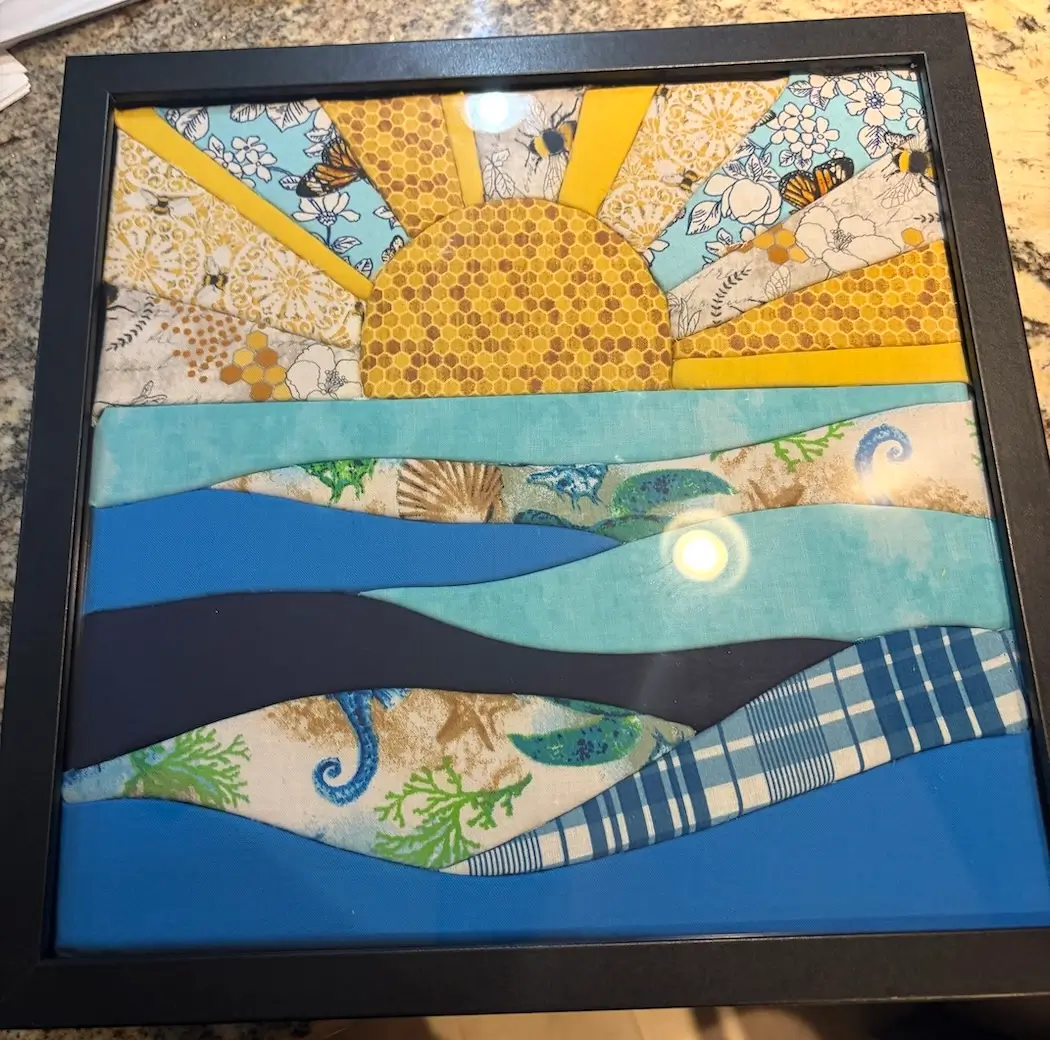
What I love most about kinusaiga is the balance between structure and creativity. The design provides a framework, but each person brings it to life in their own unique way. The choice of fabric colors, textures, and patterns completely changes the finished piece. Even when everyone starts with the same design, no two projects turn out exactly alike.
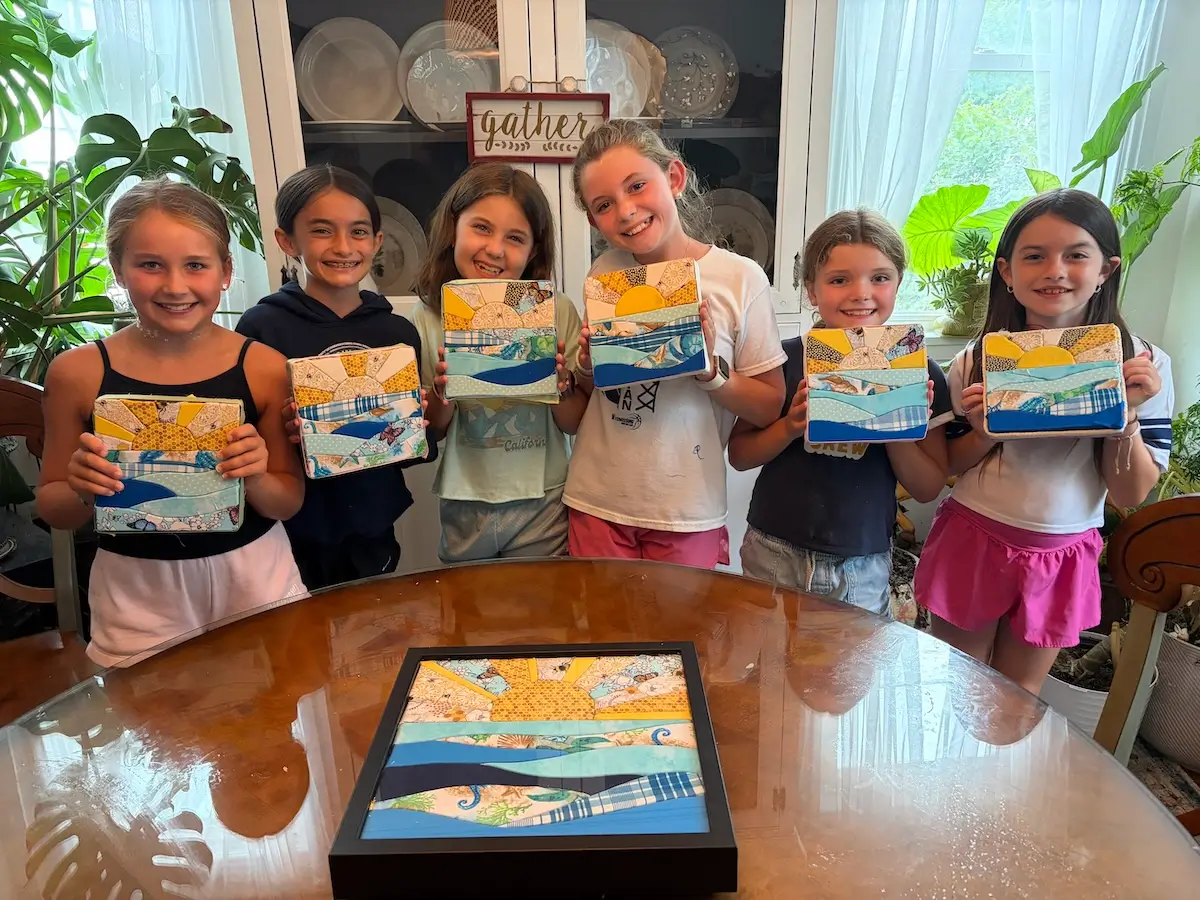
The process itself is just as rewarding as the finished artwork. As you carefully choose fabrics and gently press each piece into place with slow, deliberate strokes, something unexpected happens. Your breathing slows, your mind quiets, and the outside world begins to fade away. It’s almost meditative. Instead of rushing to finish, you find yourself enjoying each small step and watching the image gradually come to life.
That feeling is exactly what we hope to share in our first class at Start Small Farms. We want our guests to leave with more than just a beautiful piece of art. We want them to experience the satisfaction of creating something with their own hands, to enjoy a few hours of calm creativity, and to discover a craft they may never have tried otherwise.
For us, kinusaiga isn’t just a craft project—it’s an invitation to slow down, be present, and create something beautiful, one piece of fabric at a time.
If you’d like to try it at your own kitchen table before our first class, we wrote down what it is, what you need, and how to do it step by step.
— Niki